
The mutapa empire

Mapungubwe Hill I Mapungubwe King- & Queendom
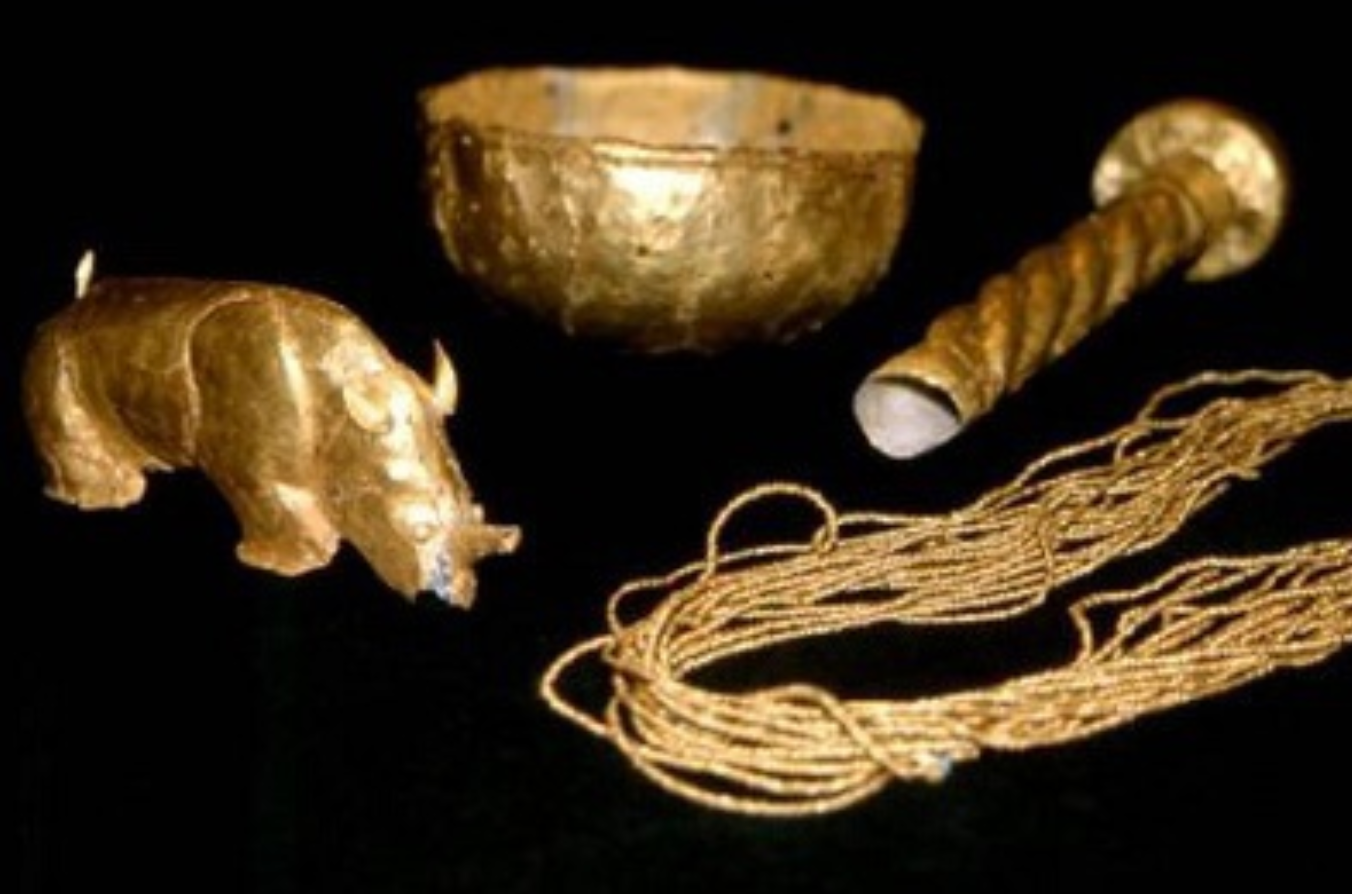
Gold Artifacts found in royal burial places on Mapungubwe Hill

Tower in the Great Inclosure I Graet Zimbabwe I Mutapa Empire

Wall of the Great Zimbabwe Monument

Great Zimbabwe Monument I Zimbabwe Kingdom

Old Portuguese map of Mutapa

MapungubweHill

Mapungubwe Golden Rhino

Shona wooden headrest

Johannes the 1st from Ethiopia
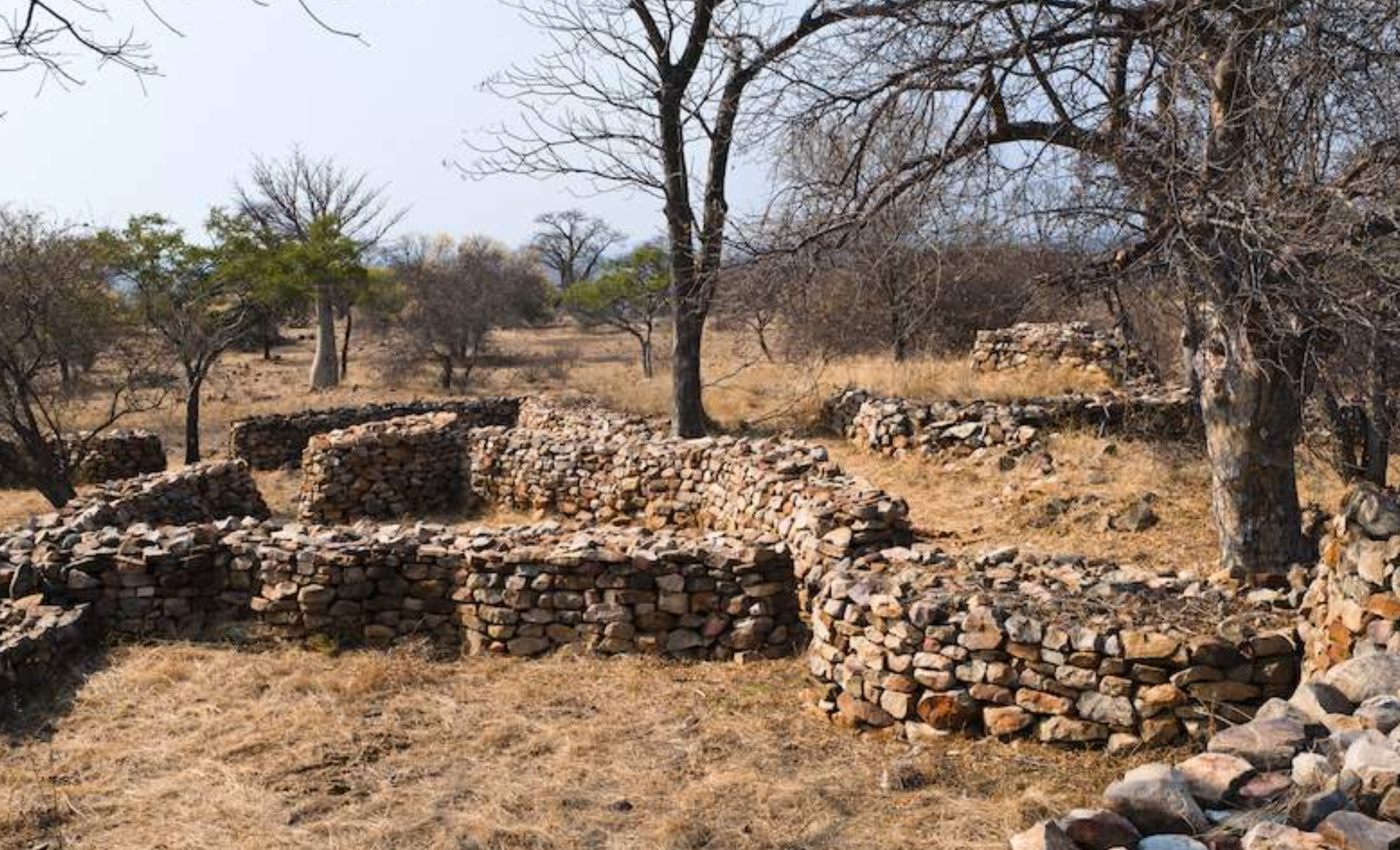
The Queen’s grave at Thulamela Cultural Site I Motapa Empire

Mapunubwe glass beads
The Kingdom of Mutapa – sometimes referred to as the Mutapa Empire, Mwenemutapa, (Shona: Mwene we Mutapa, Portuguese: Monomotapa) – was an African kingdom in Zimbabwe, which expanded to what is now modern-day Mozambique.

The Portuguese term Monomotapa is a transliteration of the Shona royal title Mwenemutapa derived from a combination of two words Mwene meaning Prince or Lord, and Mutapa meaning land. Over time the monarch’s royal title was applied to the kingdom as a whole, and used to denote the kingdom’s territory on maps from the period.[2]
General Information

History
There are several Mutapa origin stories, the most widely accepted told by oral tradition is of the princes of Great Zimbabwe. The first “Mwene” was a warrior prince named Nyatsimba Mutota from the Kingdom of Zimbabwe who expanded the reach of the kingdom initially to discover new sources of salt in the north.[3] It is believed Prince Mutota found salt in his conquest of the Tavara, a Shona subdivision. Another historical narrative of the empire’s origins is that Prince Mutota had broken away from Great Zimbabwe after going to war with Prince Mukwati, (believed to have been either his brother or cousin) over control of the Kingdom.
Expansion
Mutota’s son and successor, Nyanhewe Matope, extended this new kingdom into an empire encompassing most of the lands between Tavara and the Indian Ocean.[4] This empire had achieved uniting a number of different peoples in Southern Africa by building strong, well-trained armies and encouraging states to join voluntarily, offering membership in the Great council of the Empire to any who joined without resistance.[5] Matope’s armies overran the kingdom of the Manyika as well as the coastal kingdoms of Kiteve and Madanda.[4] By the time the Portuguese arrived on the coast of Mozambique, the Mutapa Kingdom was the premier state in the region.[4] He raised a strong army which conquered the Dande area of the Tonga and Tavara. The empire had reached its full extent by the year 1480 a mere 50 years following its creation.[5]
Religion
The Emperor Mutope had left the empire with a well-organised religion with a powerful priesthood. The religion of the Mutapa kingdom revolved around ritual consultation of spirits and of royal ancestors. Shrines were maintained within the capital by spirit mediums known as mhondoro. The mhondoro also served as oral historians recording the names and deeds of past kings.[6]
Portuguese Contact
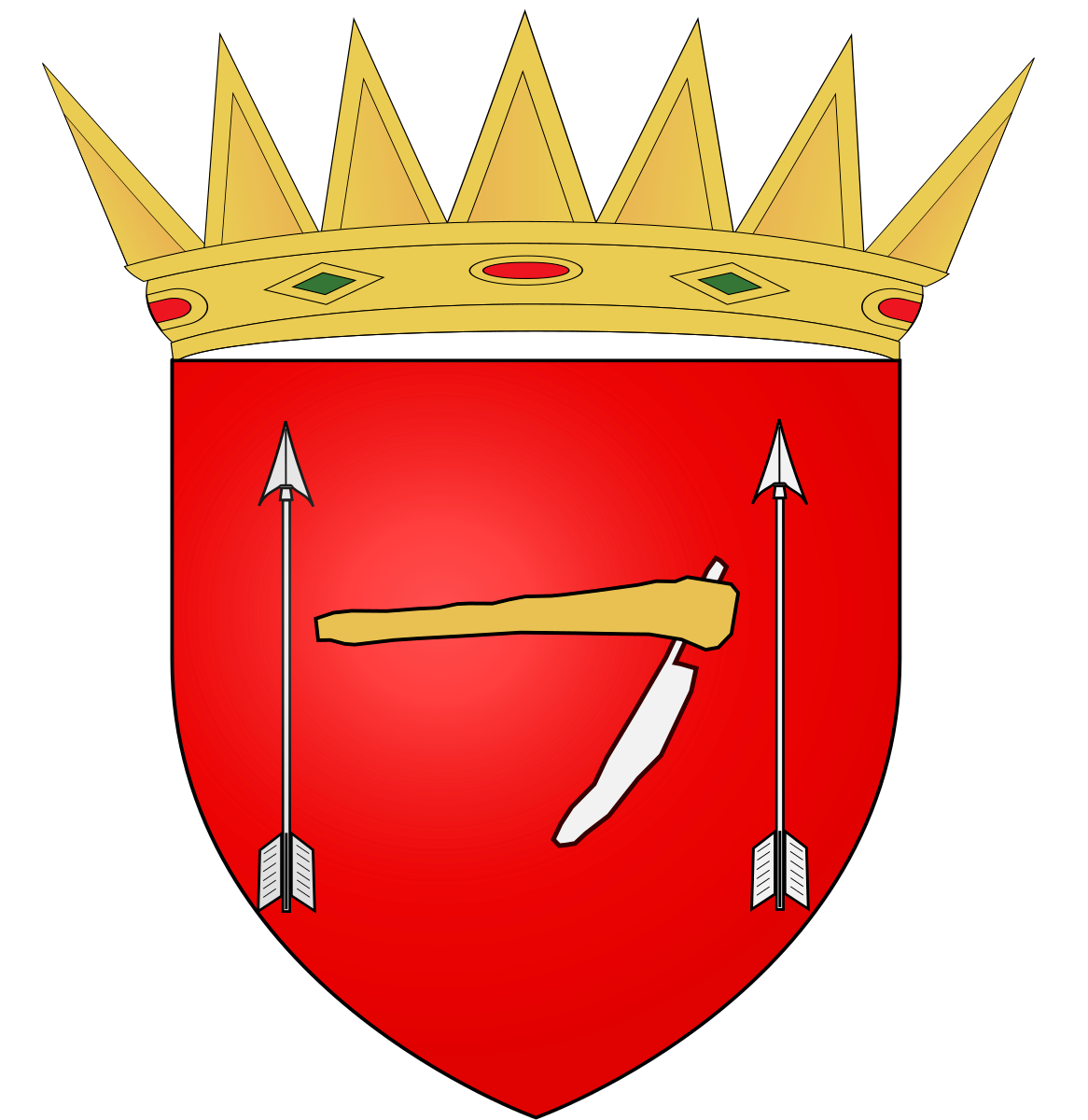
Arms granted to the Mwenemutapa in 1569 by the King of Portugal.
The Portuguese dominated much of southeast Africa’s coast, laying waste to Sofala and Kilwa, by 1515.[7] Their main goal was to dominate the trade with India; however, they unwittingly became mere carriers for luxury goods between Mutapa’s sub-kingdoms and India[citation needed]. As the Portuguese settled along the coast, they made their way into the hinterland as sertanejos (backwoodsmen). These sertanejos lived alongside Swahili traders and even took up service among Shona kings as interpreters and political advisors. One such sertanejo, António Fernandes, managed to travel through almost all the Shona kingdoms, including Mutapa’s metropolitan district, between 1512 and 1516.[8]
The Portuguese finally entered into direct relations with the Mwenemutapa in the 1560s.[3] They recorded a wealth of information about the Mutapa kingdom as well as its predecessor, Great Zimbabwe. According to Swahili traders whose accounts were recorded by the Portuguese historian João de Barros, Great Zimbabwe was a medieval capital city built of stones of marvellous size without the use of mortar. And while the site was not within Mutapa’s borders, the Mwenemutapa kept noblemen and some of his wives there.[4] By the 17th century, other Europeans would extensively describe Mutapa architecture through paintings. Olfert Dapper revealed four grand gateways which led to several halls and chambers in the Mutapa palace. The ceilings of the rooms in the palace were gilt with golden plates alongside ivory chandeliers which hung on silver chains and filled the halls with light.[9]
In 1569, King Sebastian of Portugal made a grant of arms to the Mwenemutapa. These were blazoned: Gules between two arrows Argent an African hoe barwise bladed Or handled Argent – The shield surmounted by a Crown Oriental.This was probably the first grant of arms to a native of southern Africa; however it is unlikely that these arms were ever actually used by the Mwenemutapa.[10]
The Portuguese dominated much of southeast Africa’s coast, laying waste to Sofala and Kilwa, by 1515.[7] Their main goal was to dominate the trade with India; however, they unwittingly became mere carriers for luxury goods between Mutapa’s sub-kingdoms and India[citation needed]. As the Portuguese settled along the coast, they made their way into the hinterland as sertanejos (backwoodsmen). These sertanejos lived alongside Swahili traders and even took up service among Shona kings as interpreters and political advisors. One such sertanejo, António Fernandes, managed to travel through almost all the Shona kingdoms, including Mutapa’s metropolitan district, between 1512 and 1516.[8]
The Portuguese finally entered into direct relations with the Mwenemutapa in the 1560s.[3] They recorded a wealth of information about the Mutapa kingdom as well as its predecessor, Great Zimbabwe. According to Swahili traders whose accounts were recorded by the Portuguese historian João de Barros, Great Zimbabwe was a medieval capital city built of stones of marvellous size without the use of mortar. And while the site was not within Mutapa’s borders, the Mwenemutapa kept noblemen and some of his wives there.[4] By the 17th century, other Europeans would extensively describe Mutapa architecture through paintings. Olfert Dapper revealed four grand gateways which led to several halls and chambers in the Mutapa palace. The ceilings of the rooms in the palace were gilt with golden plates alongside ivory chandeliers which hung on silver chains and filled the halls with light.[9]
In 1569, King Sebastian of Portugal made a grant of arms to the Mwenemutapa. These were blazoned: Gules between two arrows Argent an African hoe barwise bladed Or handled Argent – The shield surmounted by a Crown Oriental.[clarification needed] This was probably the first grant of arms to a native of southern Africa; however it is unlikely that these arms were ever actually used by the Mwenemutapa.[10]
The Accidental Crusade
In 1561, a Portuguese Jesuit missionary managed to make his way into the Mwenemutapa’s court and convert him to Christianity.[2] This did not go well with the Muslim merchants in the capital, and they persuaded the king to kill the Jesuit only a few days after his baptism. This was all the justification the Portuguese needed to penetrate the interior and take control of the gold mines and ivory routes. After a lengthy preparation, an expedition of 1,000 men under Francisco Barreto was launched in 1568. They managed to get as far as the upper Zambezi, but local disease decimated the force. The Portuguese returned to their base in 1572 and took their frustrations out on the Swahili traders, whom they massacred. They replaced them with Portuguese and their half-African progeny who became prazeiros (estate holders) of the lower Zambezi. Mutapa maintained a position of strength exacting a subsidy from each captain of Portuguese Mozambique that took the office. The Mwenemutapa also levied a duty of 50 percent on all trade goods imported.[11]
decline
Mutapa proved invulnerable to attack and even economic manipulation due to the Mwenemutapa’s strong control over gold production.[11] What posed the greatest threat was infighting among different factions which led to opposing sides calling on the Portuguese for military aid. However, the Portuguese proved to be happy with the downfall of the Mutapa state.
Portuguese Control
In 1629 the Mwenemutapa attempted to throw out the Portuguese. He failed and in turn he himself was overthrown, leading to the Portuguese installation of Mavura Mhande Felipe on the throne.[12] Mutapa signed treaties making it a Portuguese vassal and ceding gold mines, but none of these concessions were ever put into effect.[11] Mutapa remained nominally independent, though practically a client state. All the while, Portugal increased control over much of southeast Africa with the beginnings of a colonial system. The Portuguese were now in control of the trade and the trade routes.
Loss of Prestige
Another problem for Mutapa was that its tributaries such as Kiteve, Madanda and Manyika ceased paying tribute. At the same time, a new kingdom under a Rozvi dynasty near Barwe was on the rise. All of this was hastened by Portugal retaining a presence on the coast and in the capital.[11] At least one part of the 1629 treaty that was acted on was the provision allowing Portuguese settlement within Mutapa. It also allowed the praezeros to establish fortified settlements across the kingdom. In 1663, the praezeros were able to depose Mwenemutapa Siti Kazurukamusapa and put their own nominee, Kamharapasu Mukombwe on the throne.[13]
Butwa Invasion
In the 17th century, a low ranking Mutapa prince broke away from the Empire, invading the neighboring kingdom of Butua. The leader of this Dynasty became known as Changamire Dombo. A possible reason for the breakaway was Dombo’s dissatisfaction with the levels of Portuguese interference in the Mwenemutapa Empire’s governance.
By the late 17th century, Changamire Dombo was actively challenging Mutapa. In 1684 his forces encountered and decisively defeated those of Mwenemutapa Kamharapasu Mukombwe just south of Mutapa’s metro district at the Battle of Mahungwe. When Mukombwe died in 1692, a succession crisis erupted. The Portuguese backed one successor and Dombo another. In support of his candidate, Changamire Dombo razed the Portuguese fair-town of Dembarare next to the Mutapa capital and slaughtered the Portuguese traders and their entire following. From 1692 until 1694, Mwenemutapa Nyakambira ruled Mutapa independently. Nyakambira was later killed in battle with the Portuguese who then placed Nyamaende Mhande on the throne as their puppet.
In 1695, Changamire Dombo overran the gold-producing kingdom of Manyika and took his army east and destroyed the Portuguese fair-town of Masikwesi. This allowed him complete control of all gold-producing territory from Butwa to Manyika, supplanting Mutapa as the premier Shona kingdom in the region.[14]
Shifting Rulers
It appears neither the Rozwi nor the Portuguese could maintain control of the Mutapa state for very long, and it moved back and forth between the two throughout the 17th century. Far from a victim of conquest, the Mutapa rulers actually invited in foreign powers to bolster their rule. This included vassalage to Portuguese East Africa from 1629 to 1663 and vassalage to the Rozwi Empire from 1663 until the Portuguese return in 1694. Portuguese control of Mutapa was maintained or at least represented by an armed garrison at the capital. In 1712, yet another coveter of the throne invited the Rozwi back to put him on the throne and kick out the Portuguese. This they did, and Mutapa again came under the control of the Rozwi Empire. The new Mwenemutapa Samatambira Nyamhandu I become their vassal, while the outgoing king was forced to retreat to Chidama in what is now Mozambique.
Independence and Move from Zimbabwe
The Rozwi quickly lost interest in Mutapa, as they sought to consolidate their position in the south. Mutapa regained its independence around 1720. By this time, the kingdom of Mutapa had lost nearly all of the Zimbabwe plateau to the Rozwi Empire. In 1723, Nyamhandi moved his capital into the valley near the Portuguese trading settlement of Tete, under Mwenemutapa Nyatsusu. Upon his death in 1740, the young Dehwe Mapunzagutu took power. He sought Portuguese support and invited them back to Mutapa along with their garrison of armed men, but Mutapa remained independent.
Collapse
The Mwenemutapa died in 1759, sparking yet another civil war for the throne. This one was more destructive than its predecessors and Mutapa never recovered. The “winners” ended up governing an even more reduced land from Chidima. They used the title Mambo a Chidima and ruled independently of Portugal until 1917 when Mambo Chioko, the last king of the dynasty, was killed in battle against the Portuguese.
Mutapa as Ophir
The empire had another indirect side effect on the history of southern Africa. Gold from the empire inspired in Europeans a belief that Mwenemutapa held the legendary mines of King Solomon, referred to in the Bible as Ophir.[15]
The belief that the mines were inside the Mwenemutapa kingdom in southern Africa was one of the factors that led to the Portuguese exploration of the hinterland of Sofala in the 16th century, and this contributed to early development of Mozambique, as the legend was widely used among the less educated populace to recruit colonists. Some documents suggest that most of the early colonists dreamed of finding the legendary city of gold in southern Africa, a belief mirroring the early South American colonial search for El Dorado and quite possibly inspired by it. Early trade in gold came to an end as the mines ran out, and the deterioration of the Mutapa state eliminated the financial and political support for further developing sources of gold.

FROM as early as the 1500s, European and oriental explorers, hunters and prospectors scouring the land of Munhumutapa took back to the occident legendary reports of many wildly distributed gold workings of the native people of medieval Zimbabwe.
As a result, numerous prospectors and speculators, including the Cecil John Rhodes-led Pioneer Column, made their way to this country in search of gold.

In fact, as I wrote in a previous article titled ‘Minerals – Zvicherwa zvevhu’ (the fruits of the earth), minerals and the search for gold was the prime reason for colonisation; making Zimbabwe the only British colony to be occupied solely on the basis of its mineral wealth. Zimbabwe then became known as the ‘New Rand’, the ‘Land of Ophir’, the ‘Land of King Solomon’s Mines’ and ‘Rhodes’ Eldorado’, thus usurping the indigenous ownership of Munhumutapa’s mines.
Historically, the Korekore Zvimba descendants of Munhumutapa produced and worked gold for ornament and trade for several hundreds of years prior to the arrival of European miners in the late 1890s. Accounts written by colonial researchers deliberately omitted the African ownership of gold.
Even as I write today, the colonial mines and minerals act of Zimbabwe is premised on Eurocentric ownership, legality and thought processes. Indigenous owners of the land and its resources remain spectators while the world loots our gold due to our complacency and heedlessness about our mineral heritage.
Full analysis of ancient gold sites of Zimbabwe reveals a tangible, indigenous African heritage and gold extraction and processing techniques developed over centuries. The Korekore mhizha – guild craftsmen — employed chasing and embossing techniques of decorating the surface of golden objects and ornaments with stone and iron mallets.
Some of these skills are evident on the golden rhinoceros of Mapungubwe and the Ziwu divining bowls that are gilded and plated with gold. Gilding, which today is carried out by electrolysis, was invented by Brugnatelli, an Italian silver and goldsmith in 1805, but was already practiced by Zimbabwean Korekore goldsmiths in the Middle Ages through a process of fire gilding.
These goldsmiths produced various material culture using gold, which, today, are in foreign collections; notably were Shona mazers – circular drinking vessels with golden rims, and golden rimmed drinking horns made from ox-horns, similar to the 15th Century Pusey Manor horns of King Knowde Canute of Berkshire, England, known as ‘Regent of the Horn’.
Stimulated by gold production, the Munhumutapa era was a period of great mineral productivity and tremendous creativity within every field of culture, trade and economic activity.
Gold mining and exploration in Zimbabwe has been going on from ancient times, and it is estimated that a third (about 700 tonnes) of all historical gold production was mined locally from the 7th Century until the introduction of mechanised mining methods with the arrival of the whites about a century ago.
There are over 4 000 thousand recorded gold deposits, nearly all of them located on ancient workings. Inland rivers were also panned for the precious metal. Here, alluvial gold was measured by ‘nhenga ye nungu’ or ‘ngwewewe’ (per porcupine quill) and gold nuggets were scaled on ‘huremu wembeya’ – the weight of a small clay finger bowl, which is equivalent to the weight of a 500g can of baked beans today.
A long-forgotten technique was the use of galyak skins (the soft skin of premature lambs) of the indigenous fat-tailed sheep breed – ‘makwayi/hwai dze chivanhu’ depicted on late iron age cave paintings, that were used to trap alluvial gold in shallow rivers during the winter months. In ancient MaDzimbahwe, winter, once the harvest was over, was peak period for gold excavation, panning, smithing and the fabrication of ornaments and jewellery, such as ‘zvuma’ – the golden beads used for making anklets for various cultural purposes.
Gold production and ornamentation was an indigenous heirloom culture, exclusive to Korekore royalty of Munhumutapa. Given most gold mines were concentrated in Mashonaland West and North, known in colonial times as the ‘Mashonaland Goldfields’, it is the Korekore of Zvimba who have a long and sustained history of gold extraction, gold panning, processing and gold production in Zimbabwe.
The occurrence of gold in Zimbabwe is mainly confined to hydrothermal vein and shear zone deposits found exclusively in rocks of the Basement Complex age formed 2 400 million years or more ago.
The only noteworthy production from outside the Zimbabwe craton has been Renco Mine, which is in ancient deformed, high-grade metamorphic rocks of the Archean age North Marginal Zone of the Limpopo Mobile Belt and a number of mines in the Proterozoic Piriwiri Group of metamorphosed argillaceous sedimentary rocks with minor volcanics.
Some gold is also recovered as a by-product from copper deposits in the Deweras Group Sediments. The production of alluvial gold, present along all the major rivers draining the greenstone belts, has largely been the domain of illegal gold panners.
Until the 1930s, gold mining was the most important industry in the country in colonial times, and still is today. Gold is the most important factor in international finance with the value of the world’s major currencies being historically pegged to gold.
This changed with the unravelling of the US gold standard in 1971 and the eventual collapse of the Bretton Woods system During the gold standard, the US dollar was backed by gold while the foreign currency exchange rates were dictated by the Bretton Woods system.
In August 1971, the Nixon Administration announced the halt of the free conversion between the US dollar and gold, catalysing the collapse of the gold standard and, subsequently, the Bretton Woods system. Since then, with few exceptions, gold has significantly outperformed all major currencies and commodities as a means of exchange.
This outperformance was particularly marked immediately after the end of the gold standard. A key factor behind this robust performance was that the supply growth of gold changed little over time – increasing by approximately 1,4 percent per annum over the past 20 years.
By contrast, fiat money can be printed in unlimited quantities to support monetary policy, as exemplified by the quantitative easing measures in the aftermath of the Global Financial Crisis (GFC). In recent years, the rapidly increasing global money supply and a low to negative rate environment have fostered an optimal environment for gold to outperform global sovereign debt, such as US treasuries and to track the global money supply.
Vital for understanding and interpreting this important mining history of our economy today is the understanding of the role of gold in Shona antiquity and the cultural economic systems of the late Iron Age communities, as well as Zvimba MaDzimbahwe complex and traditions of gold workings.
Gold is our indigenous cynosure resource, an industry which needs to be judiciously reclaimed.
Dr Tony Monda holds a PhD and a DBA (Doctorate in Business Administration) in Post-Colonial Heritage Studies. He is a gemology researcher and connoisseur.
Legacy
For several centuries, this trading empire enabled people across a large territory to live in peace and security under a stable government and succession of rulers. With primary records dating back to 1502, the empire is a “prime testing ground for theories … concerning economic, political and religious development” in pre-colonial Africa.Beach comments that the Mutapa was one of only four Shona states that was not entirely “uprooted by new settlements of people” and the only one “close to Portuguese centers” thus providing important data on contact and relationships between this and other Shona states as well as with Europeans. The Mutapa Empire is an example of a working system of government in Africa and of a flourishing civilization, both of which are often assumed to have been absent before the coming of the Europeans.
References
- Bairoch, page 59
- ^ Jump up to:a b Herbermann, Charles, ed. (1913). . Catholic Encyclopedia. New York: Robert Appleton Company.
- ^ Jump up to:a b Oliver, page 203
- ^ Jump up to:a b c d Oliver, page 204
- ^ Jump up to:a b Williams, Chancellor (1987). The Destruction of Black Civilisation. Chicago: Third World Press. pp. 280. ISBN 9780883780305.
- ^ Oliver, page 205
- ^ Oliver, page 206
- ^ Oliver, page 207
- ^ Gardner F. Williams (2011). The Diamond Mines of South Africa: Some Account of Their Rise and Development. Cambridge University Press. p. 56. ISBN 9781108026598.
- ^ Slater, Stephen (1999). “Africa”. The Complete Book of Heraldry. London: Anness Publishing. p. 228.
- ^ Jump up to:a b c d Oliver, page 208
- ^ Stewart, page 190
- ^ Hall, page 133
- ^ Oliver, page 209
- ^ Elkiss, T.H. (1981). The Quest for an African Eldorado: Sofala, Southern Zambezia, and the Portuguese, 1500–1865. Crossroads Press. p. 16.
sources
-
- Bairoch, Paul (1991). Cities and economic development: from the dawn of history to the present. Chicago: university of Chicago Press. p. 596. ISBN 0-226-03466-6.
- Oliver, Roland & Anthony Atmore (1975). Medieval Africa 1250–1800. Cambridge: Cambridge University Press. pp. 738. ISBN 0-521-20413-5.
- Owomoyela, Oyekan (2002). Culture and customs of Zimbabwe. Westport: Greenwood Publishing Group. pp. 163. ISBN 0-313-31583-3.
- Stewart, John (1989). African States and Rulers. Jefferson: McFarland & Company, Inc. pp. 395. ISBN 0-89950-390-X.
- 1.0 1.1 D.N. Beach, The Mutapa Dynasty: A Comparison of Documentary and Traditional Evidence, History in Africa 3(1976): 1-17.
- D.N. Beach, Review: The Mutapa State by D.N. Beach. The Journal of African History. 17(2): 311-313.
Further reading
- Elkiss, T.H. The Quest for an African Eldorado: Sofala, Southern Zambezia, and the Portuguese, 1500–1865. Waltham, MA: Crossroads Press, 1981.
Join as a Member
Get 50% until 30 June 2023
Get access to academic articles, our membership base and our newsletter.
Blog
Ghana Empire
Ghana Empire غاناWagadouواغادو c. 300–c. early 1200s The word ghana means warrior or war chief and was the title given to the rulers of the original kingdom whose Soninke name was Ouagadou. Kaya Maghan (king of gold) was another title for these...
Hello world!
Welcome to WordPress. This is your first post. Edit or delete it, then start writing!
African Royal Empires
North African Islamic Kingdoms
Algeria
- Rustamid dynasty (776-909)
- Banu Ifran dynasty (830–1040)
- Zirid dynasty (947–1090)
- Fatimid dynasty (909 1171)
- Hammadid dynasty (1014–1152)
- Kingdom of Tlemcen (1235 – 1554)
- Kingdom of Ait Abbas (1510 - 1872)
- Kingdom of Kuku (1515 – 1638)
- Ottoman Algeria (1515–1830)
Morocco
- Idrisid dynasty (789–974)
- Almoravid dynasty (1061–1145)
- Almohad dynasty (1145–1244)
- Marinid dynasty (1244–1465)
- Wattasid dynasty (1471–1554)
- Saadi dynasty (1554-1666)
- Alaouite dynasty (1666–present
Tunisia
- Alaouite dynasty (1666–present
- Fatimid dynasty (Tunisian period) (921–969)
- Zirid dynasty (973–1148)
- Hafsid dynasty (1229–1574)
- Husainid dynasty (1705-1881)
- Aghlabid dynasty (800-909)
Egypt
- Tulunid dynasty (868–905)
- Ikhshidid dynasty (935–969)
- Fatimid dynasty (Egyptian period) (969–1171)
- Ayyubid dynasty (1171–1254)
- Mamluk dynasty (1250–1517)
- Sennar Sultanate (1502–1821)
Ancient Pre-Islamic Noth African Empires
- Kingdom of Kerma (2500–1500 BC)
- Ancient Egypt (3100–650 BC)
- Kingdom of Kush (1070 BC–350 AD)
- Ancient Carthage (575–146 BC)
- Kingdom of Numidia (202 BC–40 BC)
West Africa
Kingdom of Dagbon (11. Century)
Oyo Empire (1400–1895)
Benin Empire (1240–1897)
Kaabu Empire (1537–1867)
Aro Confederacy (1690–1902)
Bonoman (11th century–19th century)
Gbokpoe Dynasty (1700) Slave Traders
Central African Empires
- Kongo Kingdom (1400–1888)
- Luba Empire (1585–1885)
- Lunda Empire (1660–1887)
- Central African Empire (1976–79)
East African Empires
- The Empire of Kitara (900 AD - present) 10]
- The Buganda Kingdom (1500–present)
- The Wanga Kingdom, home of the Wanga (AbaWanga) tribe of the Luhya people. [11]
- The medieval Swahili city-states
Horn of Africa
- Ancient Barbara/Barbaroi cities and states mentioned in the Periplus of the Erythraean Sea (1st century).
- Opone/Xāfūn (1000 BC – 5th century AD)
- Mundus/Xīs
- Mosylon/Bōsāso
- Malao/Berbera
- Nikon/Būr Gābo
- Sarapion/Muqdisho
- Kingdom of Aksum (1st century – 9th century)
- Kingdom of Bazin (9th century)
- Kingdom of Belgin (9th century)
- Kingdom of Jarin (9th century)
- Kingdom of Qita'a (9th century)
- Kingdom of Nagash (9th century)
- Kingdom of Tankish (9th century)
- Sultanate of Mogadishu (10th century – 16th century)
- Ethiopian Empire (1137–1974)
- Zagwe dynasty (1137–1270)
- Solomonic dynasty (1270–1974)
- Sultanate of Ifat (1285–1415)
- Isaaq Sultanate (17th century –1884)
- Ajuran Sultanate (1300s–1700s)
- Adal Sultanate (1415–1555)
- Sultanate of Harar (1526–1577)
- Emirate of Harar (1647–1887)
- Sultanate of the Geledi (late 17th century – late 19th century)
- Majeerteen Sultanate (mid-18th century – early 20th century)
- Sultanate of Aussa (1734–present)
- Kingdom of Gomma (early 1800s–1886)
- Kingdom of Jimma (1830–1932)
- Kingdom of Gumma (1840–1902)
- Sultanate of Hobyo (1880s–1920s)
- Dervish state (1896–1920)
Southern African Empires
The Mutapa Empire or Empire of Great Zimbabwe (1450–1629) was a medieval kingdom located between the Zambezi and Limpopo rivers of Southern Africa in the modern states of Zimbabwe and Mozambique. Remnants of the historical capital are found in the ruins of Great Zimbabwe.
- Zulu Kingdom
- Maravi Empire or Marawi or Merowi or Merowe/ Meroe Empire. Not to be confused with Ancient Meroe.
- Kingdom of Mapungubwe
- Rozvi Empire
- Xhosa Kingdom
What are you waiting for?
